Digital Transformation Is Not About Technology

Most business executives think – often reflected by who they bring to the room when you discuss the topic with a CEO – that Digital Transformation is about technology. It is not.

Certainly, top notch technology capabilities are a critical ingredient in all Digital Transformation success stories, but there is a lot more to it. This is the purpose and central theme of this blog: debunking the notion that technology is the most important factor in making a start-up or centuries old companies more competitive with digitally driven innovation, and expanding the field of view of executives to include the broader set ingredients that they will have to mix and match to lead their companies into the digital future.

Digital Before Transformation

Software is eating the world. In a now famous 2011 Wall Street Journal piece, technology entrepreneur and venture capitalist Marc Andreessen brilliantly made the case of why most companies were in the way of becoming software companies – across industries, from entertainment and banking to cars, retail and logistics.

“Six decades into the computer revolution, four decades since the invention of the microprocessor, and two decades into the rise of the modern Internet, all of the technology required to transform industries through software finally works and can be widely delivered at global scale” he wrote.

While banks still own branches, airlines fly planes and Amazon last year ordered 100,000 electric delivery trucks, technology is now in charge of engaging with customers, managing risk and fares, or deploying assets – and make companies winners or losers depending on how good their algorithms are.

Most of the underlying technology has been around for some time. But now its maturity, ubiquity, and affordability – and the ingenuity of the engineers, entrepreneurs and innovators deploying it – are giving it a dramatically more significant role in shaping business models and strategies. A Transformative role.

Time to Transform

Some industries and companies can be wholly reconfigured by technology – remember Blockbuster or Tower Records? – but not all. McKinsey puts is very well: “the number of companies that can operate as pure-play disrupters at global scale are few in number, and rarer still are ecosystem shapers that set de facto standards and gain command of the leverage created by hyperscaling digital platforms.”

But even in asset or activity-intense sectors that can’t be entirely switched to digital-only experiences, modern technology is driving major change, and visionary executives the world over have taken note and quietly started reshaping strategies, business models and organizations to exploit these new opportunities. They updated their leadership styles, cultures and platforms to design and deploy entirely new ways of doing things. They embarked in a Digital Transformation.

The Impact

Academics and consulting outfits have very carefully analyzed the advances in digitization and linked them with financial performance, and the relationship is undeniable.

A seminal two-year study by the MIT Sloan School of Management analyzed more than 400 large firms and found that digitally transformed businesses are 26% more profitable than their industry competitors, drive 9% more revenue through their employees and physical assets and are 12% more valuable than their peers.

The researchers developed a digital maturity model to show how different companies are reacting to technological opportunity, and cleverly analyzed how businesses invest in technology, but more importantly, how the true leaders create the leadership and change management capabilities necessary to drive innovation, which they called transformation management intensity.

They proved that the ability to modernize strategies, organizations and processes is as – or more – important than the technology itself in the quest to be a digital leader.

Another by McKinsey found that focusing on the right digital practices, B2B companies –currently trailing B2C companies in digital maturity – can create long-term value, with the most advanced in their transformation programs driving five times more revenue growth than their peers.

Digital Leadership

Digital transformation is about Strategy, People, Innovation and Execution. Photo by standret.

So, what is Digital Leadership about then?

It is about reinventing strategies, operating models, and processes. It is about putting the customer in the center of attention of the entire organization and designing their experience from the outside in. It is about fact driven decision making and agile change management.

It is about fostering a culture of nonstop innovation and fearless renewal, of mercilessly abandoning established ways of doing things and adopting digitally enabled models.

Technology allows all of this, from the advanced analytics platforms that support decision making and action to the omnichannel platforms that support seamless customer experiences. From process automation to remote collaboration. But despite the broad availability and growing affordability, technologies alone are useless without the leadership to drive change.

Transformation is more important than Digital. And Transformation is about Strategy, People, Innovation and disciplined Execution, the components of the framework proposed in this blog.


Originally written late 2017, updated December 2020.

Digital Maturity

Digital Maturity indicates the relative development of a company and organization’s competency in key areas to establish present-day standing and help identify opportunities for improvement and priorities for investment.

This is usually accomplished running a Digital Maturity Diagnostic to determine whether an organization is lagging, competitive or leading based on a set of factors: e.g. Digital Strategy, Leadership and Culture, Digital Skills, Customer Centricity, Technical Competencies, Data & Data Analytics, Project Delivery, etc.

Academic researchers and consulting outfits have developed the models, and then applied them to large pools of organizations to determine relative maturity by company, sector, geography, etc. Many provide a set of results by category and a combined score.

Digital Maturity Reports are enormously useful tools to help business executives map where they stand in the innovation race relative to their peers, identify gaps and opportunities, throttle investment, and track progress along the digital journeys.

Examples of Digital Maturity Models:
McKinsey Digital Quotient
The EY Digital Readiness Assessment
TM Forum’s Digital Maturity Model
Deloitte Digital Maturity Model

Running a Digital Maturity Assessment is a pragmatic and practical guiding step to start the development of a Digital Transformation Strategy.

Originally posted November 2019
Updated June 2020


More on Digital Maturity

Getting AI Right: Focus on What Matters

Most companies are experimenting with AI but few are seeing results. The gap between hype and impact keeps widening. This article offers a practical framework: four fundamentals that cut through the noise — starting from…

The Hard Job of Driving Value from AI

Generative AI arrived with bold promises, but history offers a clear lesson: PCs, e-commerce, and mobile all took years to deliver real impact. Pilots are everywhere; structural gains are not. This article explores why value…

Transformation Strategy: An Execution Toolbox

Digital intensity and transformation management intensity influence revenue growth and profitability in different ways. This toolbox equips leaders to integrate superb transformational execution with their digital strategy, enabling them to achieve up to 26% greater…

The New Elements of Digital Transformation

The team behind The Digital Advantage: How Digital Leaders Outperform their Peers in Every Industry and The Nine Elements of Digital Transformation reflected on their influential research after surveying 1300 executives in more than 750…

Digital Transformation Is Not About Technology

Most business executives think – often reflected by who they bring to the room when you discuss the topic with a CEO – that Digital Transformation is about technology. It is not. Certainly, top notch…

The Digital Innovation Hub

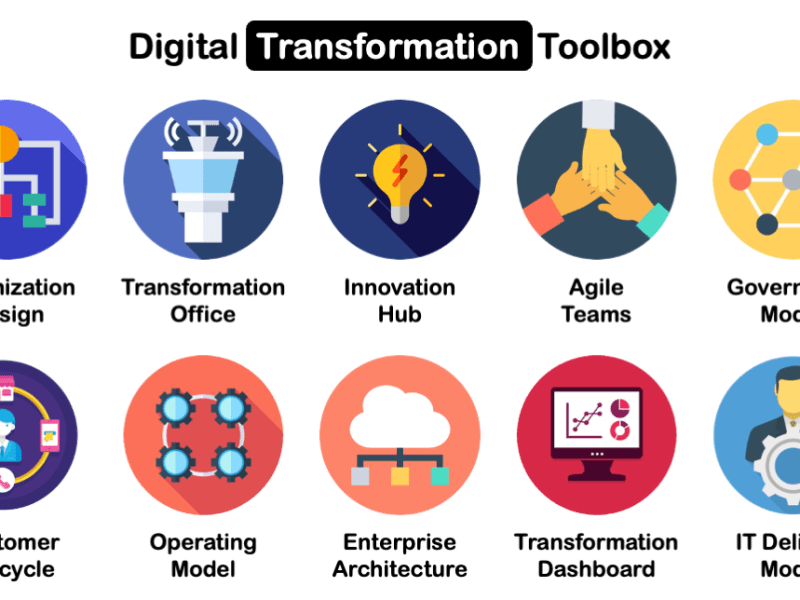
The Digital Innovation team is the source of vision, knowledge and experience in how technologies will transform the way a company does business. It is the hearth of the Transformation program and will cement the ability of the organization to innovate identifying and adopting future technologies beyond the initial change initiative.

Name and purpose

While the name may change depending on company size and convention (e.g. Digital Innovation Center in larger corporations, Digital Innovation Team in smaller ones, Digital Excellence Center after becoming a Digital leader) the purpose is similar: a compact but assertive group of specialists to lead the design and implementation of the initiatives that bring to life the Digital Transformation.

Responsibilities and influence

Members of the Digital Innovation Team collaborate with business teams to identify, assess and eventually develop innovation opportunities enabled by technology, and then guide the IT teams to implement and manage the relevant systems. Some organizations call them Product Owners, although this may be more or less applicable depending on industry and scenario.

They are also influencers and a support function, the go-to experts when line of business leaders or teams come across ideas, opportunities o problems that could be addressed with technology. They partner with and empower the less technically-savvy to help them be Digital innovators.


Digital Innovation Hub

  • Contribute to the Digital Strategy
  • Monitor industry and competition
  • Research trends and innovations
  • Imagine novel applications of technology
  • Assess feasibility and potential impact
  • Develop and lead initiatives
  • Drive business outcome
  • Ensure alignment between business and technology

Organization

The team is usually structured to match the mayor “themes” or initiatives that form the basis of the Digital Strategy: Data Analytics, Customer Engagement, Digital Marketing, Process Automation, and so on. They are part of the same team (formally or virtually) to ensure that the plans they manage are aligned and connected.

In smaller organizations, this may be one of only two functions that report to the Chief Digital Officer, and in most cases will rely on a sister function, the Transformation Office, to orchestrate the Digital Strategy, the rollout of projects and drive change.

The Digital Innovation team is one -if not the- most impactful and cost-effective investment of the Digital Transformation program. Independent from line of business organizations and IT, they will focus on innovation regardless of short-term pressures or complacency.

The Nine Elements of Digital Transformation

Based on the research behind their pioneering paper The Digital Advantage: How digital leaders outperform their peers in every industry, George Westerman, Didier Bonnet, and Andrew McAfee of the MIT Center for Digital Business, identify the nine characteristics that differentiate digital leaders.

“The best companies — those we call Digirati — combine digital activity with strong leadership to turn technology into transformation. This is what we call Digital Maturity. Companies vary in their digital maturity, and those that are more mature outperform those that are not.”

Consistent with other research, leaders are digitally transforming three key areas of their business: customer experience, operational processes and business models, and each of the three pillars has three elements that are changing.

The Nine Elements of Digital Transformation
By George Westerman, Didier Bonnet, and Andrew McAfee
MIT Sloan Management Review, January 2014