
The Hard Job of Driving Value from AI
Generative AI arrived quickly, with bold promises dominating headlines. But anyone who has lived through past technology shifts knows the real story: the hard job of driving value is not proving it can work – it is adopting it to transform how companies work. Just as with PCs, e-commerce, or mobile, impact will not be fast or easy. Customers, colleagues, and friends — nearly everyone I exchange perspectives with is already using GenAI to work faster, smarter, and better. That matches findings from a recent paper by Andrew McAfee and colleagues, which shows the technology delivering rapid productivity gains across…
➔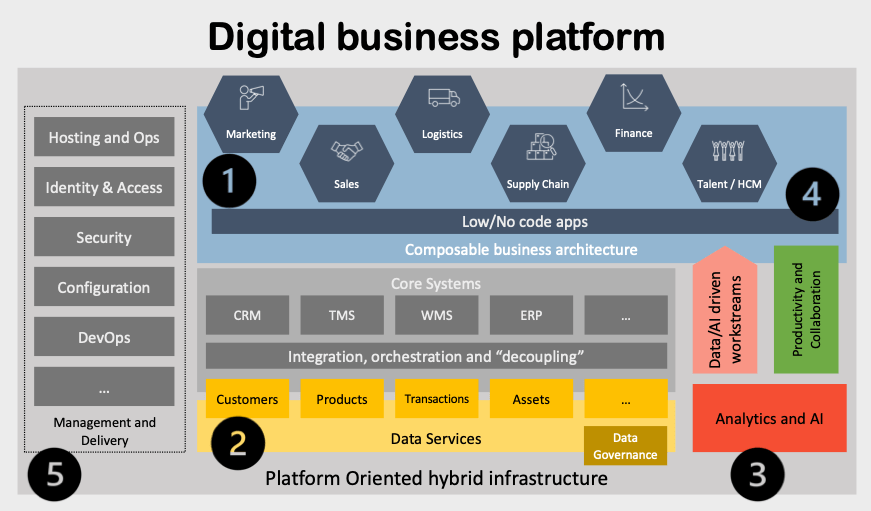
Digital Business Platform
Legacy architectures and technical debt slow digital transformation, increase costs, and hinder agility. A Digital Business Platform addresses these challenges by integrating composable business architectures, common data services, AI-driven analytics, and centralized DevOps. This platform-oriented approach accelerates innovation, simplifies IT management, and enables scalable, secure, and efficient digital operations for modern enterprises.
➔
Six Concepts That Will Shape Your Digital Strategy
Digital transformation is not about technology – it’s about how the business creates and delivers value. These six essential concepts of the transformation framework – Vision, People, Models, Architecture, Data, and Execution – turn ambition into results and help leaders restart, refocus, or accelerate their digital strategy.
➔
The Updated Digital Transformation Framework
The framework has evolved with experience, integrating new lessons from years of real transformations. It distills six components—Strategy, Talent, Business Model, Platform, Data & AI, and Execution—that help organizations align vision, capabilities, and delivery, turning digital ambition into measurable progress and sustained competitive advantage.
➔
Transformation Strategy: An Execution Toolbox
Digital intensity and transformation management intensity influence revenue growth and profitability in different ways. This toolbox equips leaders to integrate superb transformational execution with their digital strategy, enabling them to achieve up to 26% greater profitability than their competitors.
➔
Anatomy of a Digital Strategy
The strategy is the starting point of the digital transformation journey. Digital leaders have a sound strategy. Strategy is repeatedly cited in digital transformation papers, books, media coverage, and this blog. Strategy, strategy, and more strategy. So, how does a digital strategy look like? One important clarification before going further, this post is not a comprehensive strategic thinking methodology to develop a digital transformation strategy. For those beginning the digital journey, the framework provides a practical guide to get started. This post proposes a structure to organize ideas, priorities, initiatives, and projects to describe the digital future and the route…
➔
Digital Transformation Is Not About Technology
Most business executives think – often reflected by who they bring to the room when you discuss the topic with a CEO – that Digital Transformation is about technology. It is not. Certainly, top notch technology capabilities are a critical ingredient in all Digital Transformation success stories, but there is a lot more to it. This is the purpose and central theme of this blog: debunking the notion that technology is the most important factor in making a start-up or centuries old companies more competitive with digitally driven innovation, and expanding the field of view of executives to include the…
➔
Digital Maturity
Digital Maturity indicates the relative development of a company and organization’s competency in key areas to establish present-day standing and help identify opportunities for improvement and priorities for investment. This is usually accomplished running a Digital Maturity Diagnostic to determine whether an organization is lagging, competitive or leading based on a set of factors: e.g. Digital Strategy, Leadership and Culture, Digital Skills, Customer Centricity, Technical Competencies, Data & Data Analytics, Project Delivery, etc. Academic researchers and consulting outfits have developed the models, and then applied them to large pools of organizations to determine relative maturity by company, sector, geography, etc.…
➔ Digital Transformation: A Framework