Digital Maturity

Digital Maturity indicates the relative development of a company and organization’s competency in key areas to establish present-day standing and help identify opportunities for improvement and priorities for investment.

This is usually accomplished running a Digital Maturity Diagnostic to determine whether an organization is lagging, competitive or leading based on a set of factors: e.g. Digital Strategy, Leadership and Culture, Digital Skills, Customer Centricity, Technical Competencies, Data & Data Analytics, Project Delivery, etc.

Academic researchers and consulting outfits have developed the models, and then applied them to large pools of organizations to determine relative maturity by company, sector, geography, etc. Many provide a set of results by category and a combined score.

Digital Maturity Reports are enormously useful tools to help business executives map where they stand in the innovation race relative to their peers, identify gaps and opportunities, throttle investment, and track progress along the digital journeys.

Examples of Digital Maturity Models:
McKinsey Digital Quotient
The EY Digital Readiness Assessment
TM Forum’s Digital Maturity Model
Deloitte Digital Maturity Model

Running a Digital Maturity Assessment is a pragmatic and practical guiding step to start the development of a Digital Transformation Strategy.

Originally posted November 2019
Updated June 2020


More on Digital Maturity

The Hard Job of Driving Value from AI

Generative AI arrived quickly, with bold promises dominating headlines. But anyone who has lived through past technology shifts knows the real story: the hard job of driving value is not proving it can work –…
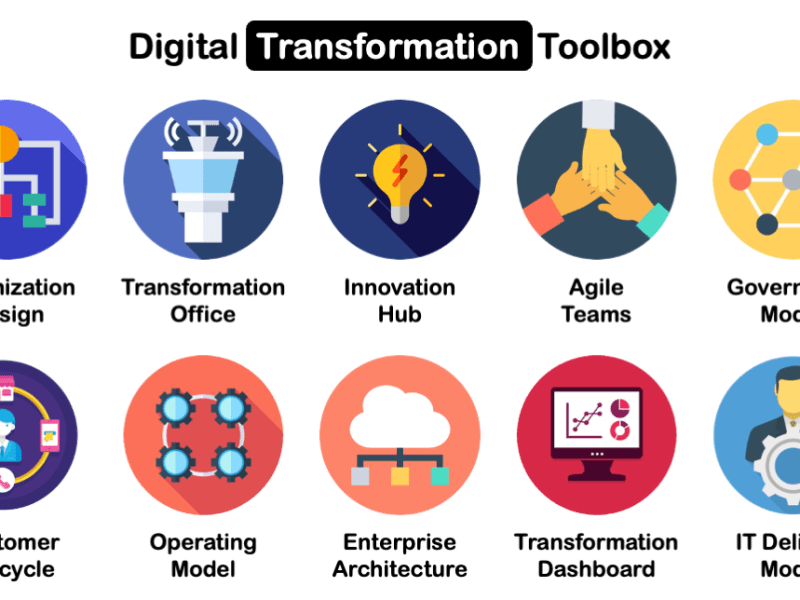
Transformation Strategy: An Execution Toolbox

Digital intensity and transformation management intensity influence revenue growth and profitability in different ways. This toolbox equips leaders to integrate superb transformational execution with their digital strategy, enabling them to achieve up to 26% greater…

The New Elements of Digital Transformation

The team behind The Digital Advantage: How Digital Leaders Outperform their Peers in Every Industry and The Nine Elements of Digital Transformation reflected on their influential research after surveying 1300 executives in more than 750…

Digital Transformation Is Not About Technology

Most business executives think – often reflected by who they bring to the room when you discuss the topic with a CEO – that Digital Transformation is about technology. It is not. Certainly, top notch…

Digital Maturity

Digital Maturity indicates the relative development of a company and organization’s competency in key areas to establish present-day standing and help identify opportunities for improvement and priorities for investment. This is usually accomplished running a…

The Digital Innovation Hub

The Digital Innovation team is the source of vision, knowledge and experience in how technologies will transform the way a company does business. It is the hearth of the Transformation program and will cement the ability of the organization to innovate identifying and adopting future technologies beyond the initial change initiative.

Name and purpose

While the name may change depending on company size and convention (e.g. Digital Innovation Center in larger corporations, Digital Innovation Team in smaller ones, Digital Excellence Center after becoming a Digital leader) the purpose is similar: a compact but assertive group of specialists to lead the design and implementation of the initiatives that bring to life the Digital Transformation.

Responsibilities and influence

Members of the Digital Innovation Team collaborate with business teams to identify, assess and eventually develop innovation opportunities enabled by technology, and then guide the IT teams to implement and manage the relevant systems. Some organizations call them Product Owners, although this may be more or less applicable depending on industry and scenario.

They are also influencers and a support function, the go-to experts when line of business leaders or teams come across ideas, opportunities o problems that could be addressed with technology. They partner with and empower the less technically-savvy to help them be Digital innovators.


Digital Innovation Hub

  • Contribute to the Digital Strategy
  • Monitor industry and competition
  • Research trends and innovations
  • Imagine novel applications of technology
  • Assess feasibility and potential impact
  • Develop and lead initiatives
  • Drive business outcome
  • Ensure alignment between business and technology

Organization

The team is usually structured to match the mayor “themes” or initiatives that form the basis of the Digital Strategy: Data Analytics, Customer Engagement, Digital Marketing, Process Automation, and so on. They are part of the same team (formally or virtually) to ensure that the plans they manage are aligned and connected.

In smaller organizations, this may be one of only two functions that report to the Chief Digital Officer, and in most cases will rely on a sister function, the Transformation Office, to orchestrate the Digital Strategy, the rollout of projects and drive change.

The Digital Innovation team is one -if not the- most impactful and cost-effective investment of the Digital Transformation program. Independent from line of business organizations and IT, they will focus on innovation regardless of short-term pressures or complacency.

The Nine Elements of Digital Transformation

Based on the research behind their pioneering paper The Digital Advantage: How digital leaders outperform their peers in every industry, George Westerman, Didier Bonnet, and Andrew McAfee of the MIT Center for Digital Business, identify the nine characteristics that differentiate digital leaders.

“The best companies — those we call Digirati — combine digital activity with strong leadership to turn technology into transformation. This is what we call Digital Maturity. Companies vary in their digital maturity, and those that are more mature outperform those that are not.”

Consistent with other research, leaders are digitally transforming three key areas of their business: customer experience, operational processes and business models, and each of the three pillars has three elements that are changing.

The Nine Elements of Digital Transformation
By George Westerman, Didier Bonnet, and Andrew McAfee
MIT Sloan Management Review, January 2014